By Aditya Acharya
Got so busy learning about the German forestry that there was no time to write frequently 🙂
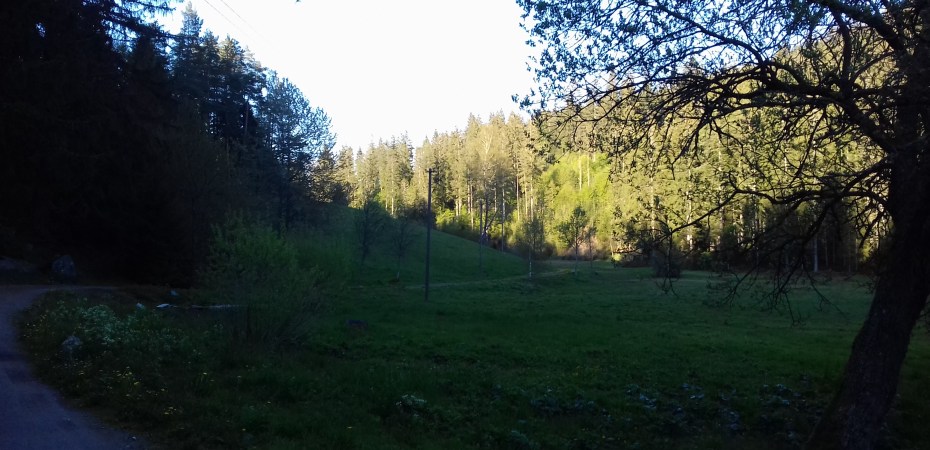
We are in the Black Forest region, in the Southwestern part of Germany. This is where the river Danube, the second longest river in Europe originates and flows through ten countries before meeting the Black Sea in the far east, flowing 2,850 kilometres away from its place of origin. We had also met it in Vienna, the Austrian capital, some days ago.
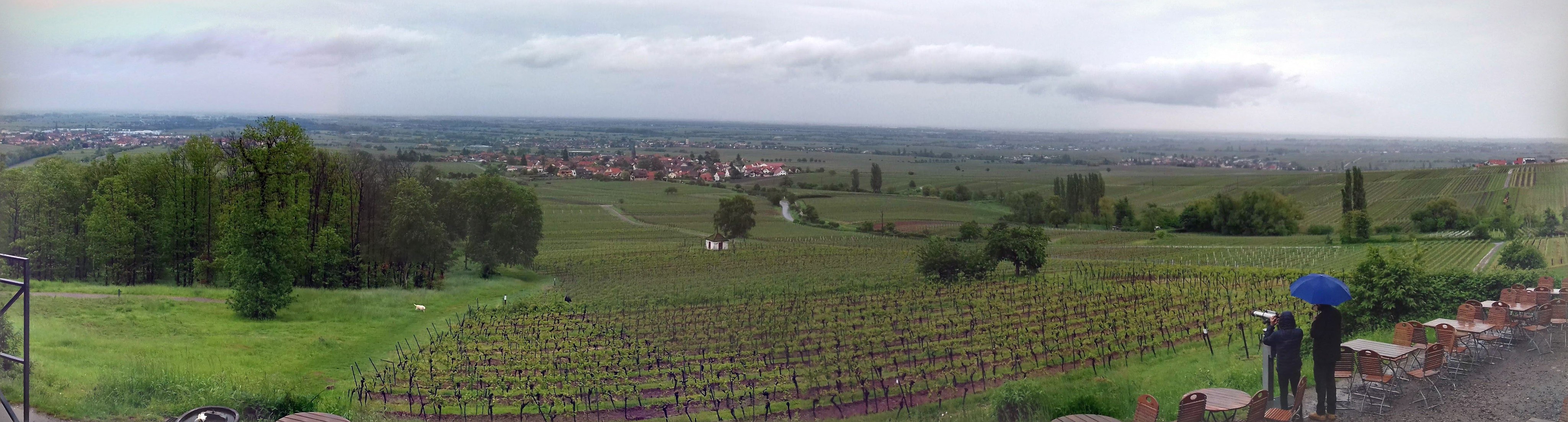
We visited the Rhine valley again, now in the German territory. The Rhine river was greatly used for timber transportation in the past as informed by our professors. We proposed our own management strategy for some Palatinate forests. Yay! We are learning how to think and plan in a sustainable way.
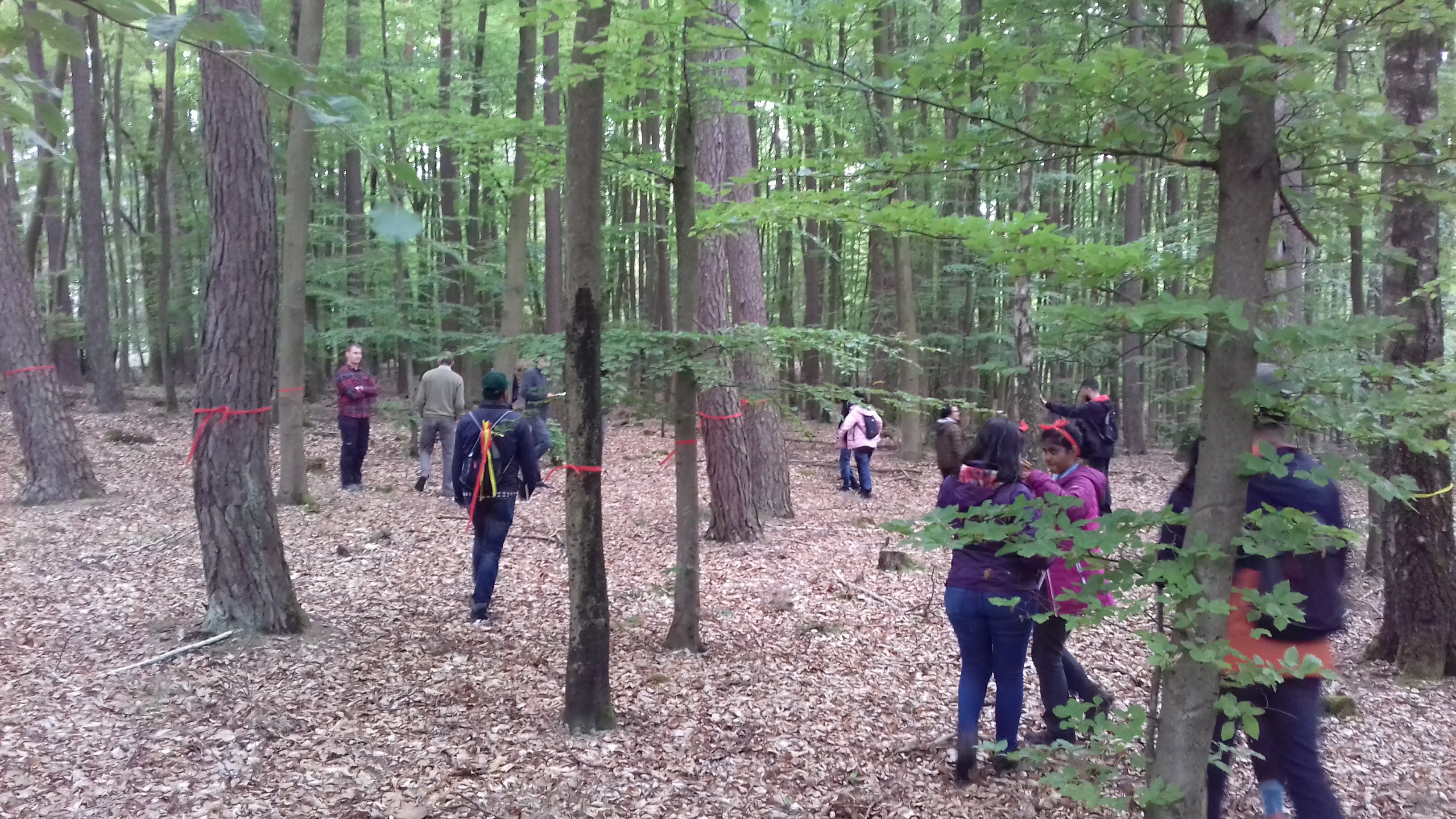
Professor Dr Heinrich Speiecker, our coordinator of the German part of the field course, always tells a joke when we start talking about sustainable management and planning.
Once he was showing a young forest stand and describing it when somebody asked: “So when are you going to harvest these trees?”
“After 50 years”, he had replied.
Confused, the other person asked, “How old are you now?”
“Seventy years.”
More confused, he asked, “So who will harvest these trees after 50 years?”
“Well, somebody will do it.” 🙂
So, in forestry, you think not only for yourselves, for within your lifetime but also for the future generations. This is always his message. And we always feel proud that we are foresters 🙂 So, we also proposed different management plans for different forests for 100 years or even more. We do not know who will come and do the harvesting after 100 years! 😀
After the first 3 nights in Esthal, we spent another night in a farmhouse in the Blackforest. The environment reminded me of my childhood where there would be similar surrounding: a tap nearby, a cowshed, a small creek nearby with the audible sound of the water flow, birds chirping around, some woods and fireplace outside, and so on.
The other day, yesterday, we went to the central part of the Black Forest and visited some selection forest stands and a museum. Oh, the RED HATS. The museum guide lady also told about the red hats in the ancient Black Forest traditions. (But museums do not amuse me that much). Professor Spiecker had already told it twice, once during the Trends in European Forestry course and also during the consortium meeting of the program in January. “There are two colours of the hat that ladies wear in the Black Forest, red and black. Let me tell you – those who wear red hats are unmarried girls and those with black are married ones. So, look for the red ones if you need to, not black 😛 “
He is a person with a great sense of humour. He always makes funny remarks now and then, which makes our studies itself so interesting. We do make jokes and he even adds to it. Such a nice teacher to spend time with. I remembered our Austrian Professor Harald Vacik too, who we spent some days with, the previous week. It’s hard to forget the times spent with people who we feel close to, no?
But unluckily, we found no ‘red hats’. 😛 Those we found were only the ones hung in the shops for selling!
So many learnings and so many fun again. I do not know when my next visit to Freiburg will be but I will come for sure. There is a joint course with AgroParis Tech, Nancy, where I will be studying for my second year and I will have to come here for a week.
Tomorrow early, we will leave for Lleida, Spain. Spain will be our last country on this field trip. See you tomorrow Spain. And see you later again Freiburg! 🙂
 A memory lane
[…] एउटा शैक्षिक भ्रमणको क्रममा, जर्मनीको ब्ल्याक फरेस्ट (Black Forest) मा म हराएँ! तर खुशीको कुरो मैले […]
LikeLike